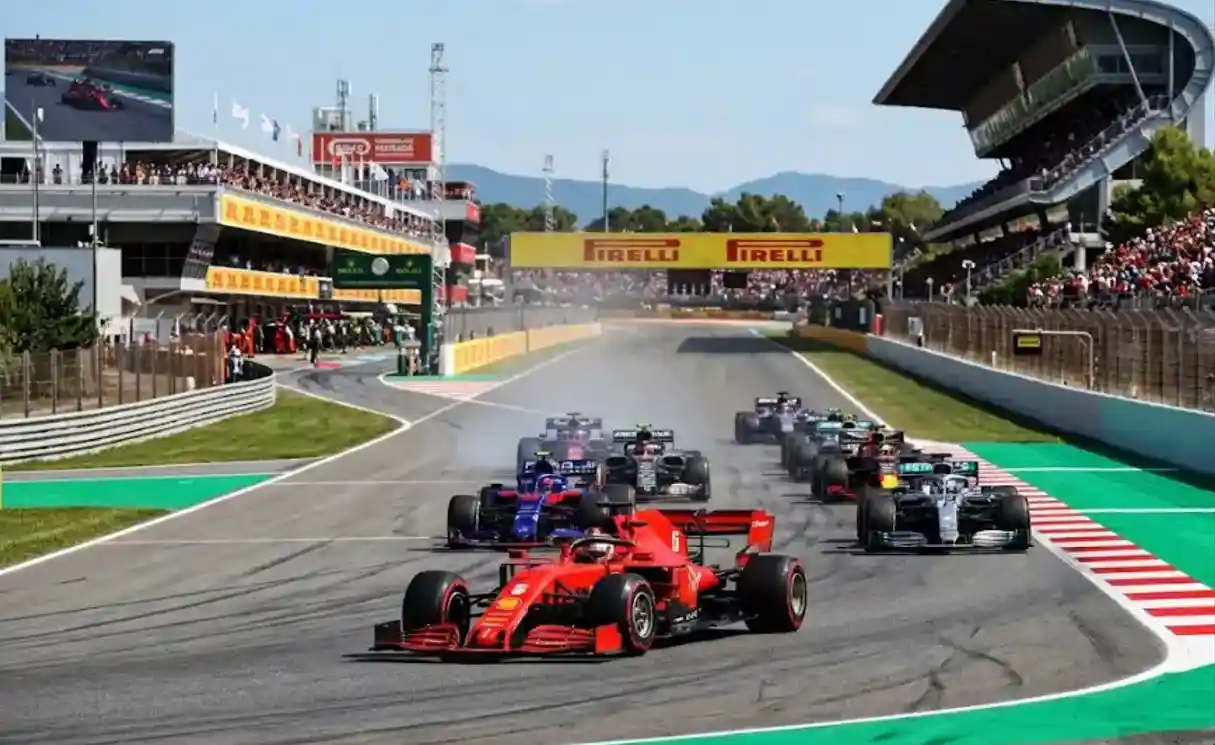
The Formula 1 World Championship stands at the absolute peak of modern motorsport, combining elite driver skill with multimillion-dollar engineering. Every Grand Prix season brings together the finest single-seater race cars on the planet, challenging global automotive manufacturers to innovate under intense regulatory pressure.
Understanding the sport requires examining both the technical machinery on the asphalt and the calculated tactics executed behind the pit wall. Below is a detailed breakdown of the fundamental pillars that define the modern championship.
1. The Dual Championship Structure
The Formula 1 World Championship operates on a dual-title framework, making team dynamics uniquely fierce. While drivers work for the same constructor, they remain each other’s primary benchmark on track.
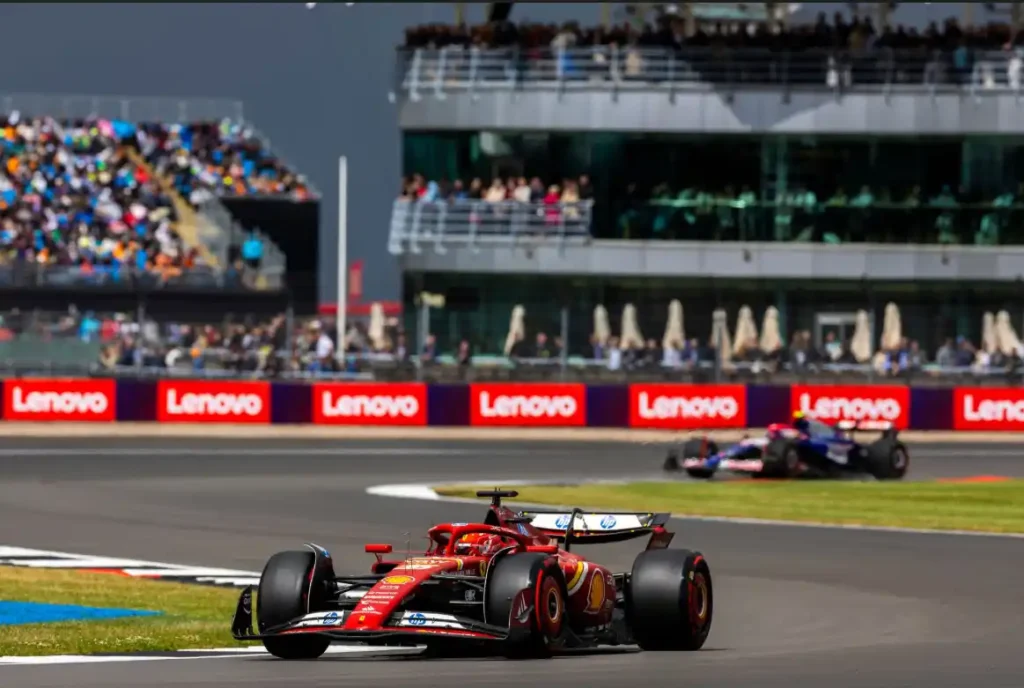
The World Drivers’ Championship (WDC)
The Drivers’ Championship crowns the individual competitor who scores the most points across a single calendar year. Points are awarded to the top ten classified finishers on Sunday:
- 1st Place: 25 points
- 2nd Place: 18 points
- 3rd Place: 15 points
- 4th to 10th: 12, 10, 8, 6, 4, 2, and 1 point
Additionally, a single bonus point is awarded for the fastest lap of the race, provided the driver finishes inside the top ten.
The World Constructors’ Championship (WCC)
The Constructors’ Championship aggregates the combined points earned by both team cars over the season. Consequently, reliability is just as vital as pure speed. Finishing positions in the WCC dictate commercial prize revenue and aero development wind-tunnel allocation for the following season.
| Metric | Drivers’ Championship (WDC) | Constructors’ Championship (WCC) |
| Winner | Individual driver | Automotive constructor / team |
| Point Calculation | Single driver total | Sum of both team cars |
| Commercial Value | Global endorsements & driver prestige | Multi-million dollar prize distribution |
| Internal Rivalry | Teammate is direct rival | Teammate collaboration required |
2. Advanced Turbo-Hybrid Power Units
Modern race cars in the Formula 1 World Championship are driven by ultra-efficient 1.6-liter turbocharged V6 internal combustion engines coupled with sophisticated electrical recovery packages.
Furthermore, these power units operate at thermal efficiency levels exceeding 50%, far outperforming standard road vehicles. The system relies on two critical electrical components:
- MGU-K (Motor Generator Unit – Kinetic): Recovers kinetic energy produced under heavy braking and converts it into stored electrical power.
- MGU-H (Motor Generator Unit – Heat): Captures thermal energy directly from hot exhaust gases to eliminate turbo lag and keep the turbine spooled.
As a result, drivers command upwards of 1,000 brake horsepower while operating under strict per-season component limits regulated by Fédération Internationale de l’Automobile (FIA).
3. Ground-Effect Aerodynamics and Clean Air Battles
Aerodynamic efficiency is the lifeblood of Formula 1 performance. Downforce presses the chassis onto the track surface, allowing drivers to take high-speed turns at lateral forces exceeding 5G.
Modern technical rules mandate venturi tunnels sculpted into the car’s underfloor. These tunnels channel high-velocity air beneath the chassis, creating a low-pressure suction zone known as the ground effect.
Because ground-effect tunnels generate clean downforce without producing heavy turbulent wake, trailing vehicles suffer far less “dirty air.” Consequently, cars can follow each other closely through technical sectors, leading to more frequent overtaking maneuvers.
4. Race Weekend Format: From Practice to the Checkered Flag
A standard weekend in the Formula 1 World Championship unfolds over three consecutive days, demanding meticulous setup adjustments at every stage:
- Friday (Free Practice 1 & 2): Teams run run-plans to validate tire wear degradation, engine mapping, and aero balance.
- Saturday (Free Practice 3 & Qualifying): Drivers push their machinery on low fuel loads in a three-part knockout session (Q1, Q2, Q3) to secure grid pole position.
- Sunday (The Grand Prix): Competitors race over a minimum distance of 305 kilometers (roughly 190 miles), barring weather-shortened events or the historic Monaco Grand Prix.
Select Grand Prix weekends also feature the F1 Sprint, a 100-kilometer dash on Saturday that offers additional championship points for the top eight finishers.
5. Tire Degradation and Pit Stop Strategy
Victory in the Formula 1 World Championship rarely depends on raw speed alone; it is an ongoing chess match played against tire wear. Official tire supplier Pirelli delivers three dry-weather slick compounds to every round:
- Soft Compound (Red): Offers maximum grip and highest cornering speeds, but degrades rapidly over long stints.
- Medium Compound (Yellow): Delivers a balanced compromise between durable race pace and structural grip.
- Hard Compound (White): Built for extended endurance and high track temperatures, requiring several laps to reach operating heat.
Regulations dictate that every driver must use at least two distinct slick compounds during a dry Grand Prix. Therefore, pit-wall strategists constantly evaluate telemetry data to decide between executing an undercut (pitting early to gain track position on fresh rubber) or an overcut (staying out longer to capitalize on clean air).
6. Sub-Two-Second Pit Stops
When a car enters the pit lane, margin for error disappears. A stationary tire swap takes approximately 1.8 to 2.4 seconds, executed by a coordinated crew of more than twenty mechanics.
Each wheel station utilizes three specialized crew members: one to operate the pneumatic wheel gun, one to remove the depleted tire, and one to mount the fresh compound. A minor wheel-nut cross-thread costs precious seconds, instantly dropping a contender down the field.
7. Global Circuits and Technical Challenges
The championship calendar tours diverse circuits across Europe, the Americas, Asia, and the Middle East, each demanding unique aerodynamic setups:
- Monza (Italy): Known as the “Temple of Speed,” demanding ultra-low-downforce wings to maximize straight-line velocity above 350 km/h.
- Circuit de Monaco (Monaco): A barrier-lined street circuit where qualifying position is critical and mechanical grip outweighs straight-line power.
- Spa-Francorchamps (Belgium): A classic venue famous for the high-compression sweep of Eau Rouge and unpredictable microclimates.
- Silverstone (United Kingdom): High-speed sequences like Maggotts, Becketts, and Chapel test downforce limits and neck endurance.
For additional analysis on race calendars and technical breakdowns, visit our Motorsport Analysis and Digital Coverage Guides
1. F1 TV (Official Formula 1 Streaming Platform)
Operated directly by Formula 1 and the FIA, F1 TV is available via web browser, mobile apps (iOS, Android), and smart TV devices (Apple TV, Android TV, Google TV, Amazon Fire TV, Roku).
| Feature | F1 TV Access | F1 TV Pro |
| Live Grand Prix & Sprint Broadcasts | No (delayed replays) | Yes (Full live coverage) |
| All 20 Driver Onboard Cameras | Replay only | Live & switchable anytime |
| Live Team Radio Audio Feeds | No | Yes (Unedited team comms) |
| Live Pit Lane & Data Channels | Live timing data only | Full pit & tracker feeds |
| Support Series (F2, F3, Porsche Supercup) | Replays | Full live coverage |
| Historical Race Archive & Documentaries | Yes | Yes |
Frequently Asked Questions (FAQ)
What is the Formula 1 World Championship?
The Formula 1 World Championship is the premier international racing competition for open-wheel, single-seater cars governed by the Fédération Internationale de l’Automobile (FIA). Spanning nine months across global circuits, it determines both the individual world champion driver and the world champion automotive constructor.
How are points awarded in the Formula 1 World Championship?
Championship points are awarded to the top ten finishers at the end of each Grand Prix:
- 1st: 25 points
- 2nd: 18 points
- 3rd: 15 points
- 4th: 12 points
- 5th: 10 points
- 6th: 8 points
- 7th: 6 points
- 8th: 4 points
- 9th: 2 points
- 10th: 1 point
An extra bonus point is awarded to the driver who sets the fastest lap of the race, provided they finish within the top ten. Additional points are distributed to the top eight finishers during Sprint race weekends.
What is the difference between the Drivers’ and Constructors’ Championships?
The World Drivers’ Championship (WDC) crowns the single driver who accumulates the highest total points individually throughout the season. The World Constructors’ Championship (WCC) aggregates the total points scored by both cars for each racing team. Finishing higher in the Constructors’ standings directly increases a team’s annual commercial prize money distribution.
Why are pit stops so fast in the Formula 1 World Championship?
Formula 1 pit stops typically take between 1.8 and 2.4 seconds due to a specialized crew of over 20 mechanics operating in complete synchronization. Each wheel station has three dedicated crew members (one on the pneumatic wheel gun, one removing the old tire, and one fitting the new tire), while front and rear jack operators lift the chassis simultaneously the split second the car stops on its marks.
What are the tire rules in a dry Formula 1 Grand Prix?
Official tire supplier Pirelli brings three dry-weather slick compounds (Soft, Medium, Hard) to each race weekend. Under FIA regulations, every driver starting a dry Grand Prix must run at least two different slick tire compounds during the race, forcing teams to complete at least one mandatory pit stop.
What type of engines do Formula 1 cars use?
Modern Formula 1 cars utilize 1.6-liter turbocharged V6 internal combustion hybrid power units revving up to 15,000 RPM. The engine works alongside dual energy recovery systems—the MGU-K (Kinetic) and MGU-H (Heat)—which together generate over 1,000 horsepower at thermal efficiencies exceeding 50%.